Saturday, April 28, 2012

New York City Opera Reunion- 1

Yesterday, April 27th 2012 the NYC Opera reunion was held across town at a small hotel, East 52nd Street. It wasn't the largest gathering, but it was huge in love and happiness.  I will try to post all images during the course of today.  Images and captions... but since this is my blog site there will be some commentary.
Marisa Galvany and Lila Herbert McGill, the reunion organizer.
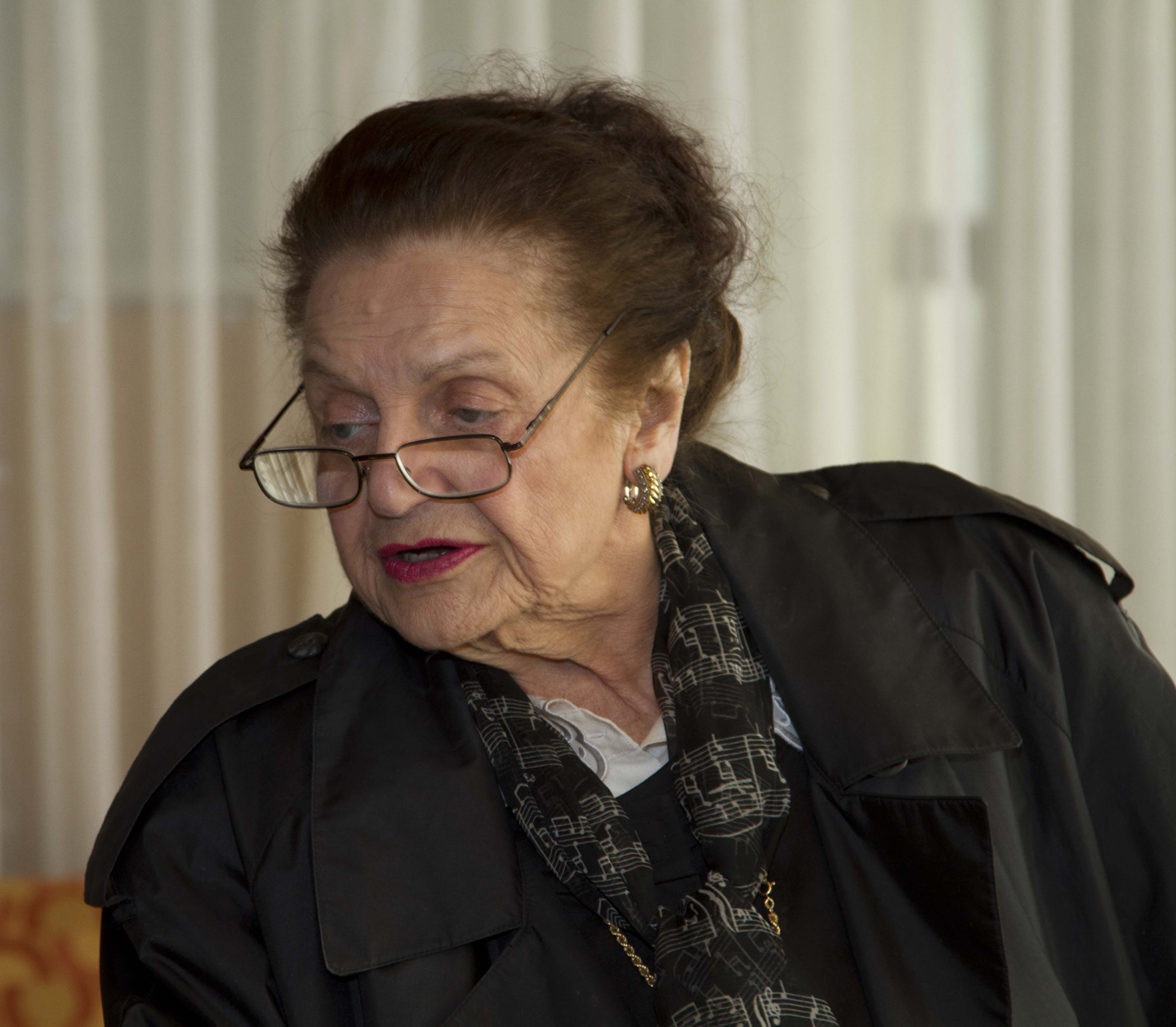

Delores Mari


Patricia Wise with John Darrenkamp


Michael Davis representing his mother, Regina Resnik


Lila Herbert with Martha Marshall and Livio Caroli.  I loved this, because I know Martha from birding and had no idea she was in the NYC Opera Orchestra


Anthea DeForest, Ann Pretzat, behind- Ruth Hider with Catherine Christiensen


Margaret Goodman, Ruth Hider,  Catherine Christiensen

Richard and Ellie Beeson with April Lindevald


Carol Bergey Skarimbas helping Harriet Green get settled, Margaret Goodman and Neil Eddinger.

Anthea DeForest with Patricia Craig

Tom Jamerson, Carol Gutknecht talking with Pat Wise

Stick on those name tags. If I could read them I could ID people.


Olivia Stapp with Marissa Galvany


Robert Paul


Eileen Schauler

To be continued......
_______________________________________________

Monday, October 11, 2010

Dame Joan Sutherland

It is with a heavy heart that I enter this post. Sometimes greatness enters our lives and we wish for it to go on forever. Dame Joan Sutherland shared her elegance and extreme artistry with the world. We rejoiced with her. She stood in awe. She was very much a part of my introduction to opera as an art form. In later years she offered friendship which I will treasure forever.


The pictures posted have never before been seen. They date back to late 1963 and early 1964, TRAVIATA, way before I honed professional photographic skills. They show the warmth, the love, the happiness.


To the Bonynge Family I send my profound heartfelt condolences. I weep with them, but at the same time I am intensely thankful to have learned from this gracious lady.


__________________________________________

Wednesday, August 19, 2009

Hildegard Behrens

It's been a while since I've done an entry on this blog. This subject can't be ignored. Hildegard Behrens was a powerhouse on the stage. No matter what she did it was exciting. When that happens the camera feels alive, challenged to capture greatness. She died yesterday, 72 years young. The memories of her performances are as vibrant now as if the performances were only yesterday.

This is a multiple exposure from ELEKTRA.
__________________________

Sunday, November 16, 2008

Not exactly opera


It is possible over time to lose enthusiasm, to stop finding pleasure in an art form. I have wondered about this in recent months. Am I burning out? Or is it just that what's being presented is lacking artistic taste?

During the past ten days I covered two events and in both cases I learned that I'm not burning out. The first event was a Memorial Service for Edgar Vincent. One of the partcipants was Joan Morris. She sang a witty song, "Black Max". It's a marvelous song, but what made this experience so special was the delivery- no costume, no fancy lighting, no excess staging, just one artist singing with total attention to words, detail, the music. The audience was rapt. So simple. So perfect.
The second event was the Martina Arroyo Fundation Gala evening. One of the participants was Paquito D'Rivera, renown jazz artist and composer. Again there were no trimmings, almost no light, no scenery, no excess, one artist playing for the audience, gripping, exciting, brilliant.


Both events brought total joy. And neither cost millions of dollars to produce. The artists knew what they were doing and required no "crutches". What was presented brought smiles and cheers from the audience. There's an important lesson: know what you're doing if you're a performer, and for producers, less is more.
________________________________

Sunday, November 2, 2008

An Opera Family


During the years that I documented the New York City Opera, 1966- 1981, it was a musical family. There was a core of singers who did a variety of roles. They knew their parts as well as their colleagues' parts. New productions got full dress rehearsals. Important complex revivals got full dress rehearsals. Everything else did not. There was no prompter's box. That meant the singers had to know what they were doing or they didn't survive. It was wonderful watching singers do a variety of roles,- comic, tragic and everything in between, all languages. There was a sense of artistic security. Sets were simple. Many costumes were one-outfit-fits-all, hemlines up and down, waist lines in and out. That's the way it was and it was musically wonderful.


I don't mean to insult the many fine performers who were there all the time, the core company. For this blog I can use Muriel Costa Greenspon as an example, because the images have already been scanned. She did a wide spectrum of roles over the years. I include appearances in Mikado, Bomarzo (if only we could again hear the Ginastera operas!), Cavalleria, Faust, Albert Herring, Pelleas, HMS Pinafore, Street Scene and Tabarro. She was one of the first opera singers to catch my attention because no matter what she was doing she was always in character.

No singer can always be assigned to do everything he or she wants to do. There is more talent than available assignments, but when you have a musical family the art of opera is well served. Without question the audience enjoyed and showed their appreciation.

I wonder now if we have lost the ability to sit, listen and understand without having every nuance visually forced. In the past the audiences were able to bring their own feelings into the experience. The New York City Opera family gave to those audiences and they reciprocated. They were a supportive, enthusiastic audience,- family performers, family audience.
____________________________________________

Saturday, October 25, 2008

A real child

Puccini knew how to pour real feelings into his music. It's all there to be delivered to the receptive audience. It doesn't need "help". Madame Butterfly has a real child, flesh and blood, which makes the drama poignant, painful, excruciatingly human. When that child is embraced at the end the audience will hurt with her. No distractions. Nothing else on that stage. Butterfly, the child and the music. I don't have time to scan every Butterfly-child image in my archive. This image, Gilda Cruz Romo, will stand for all the genuine interpretations. It is a heart-searing moment, meant to be. To distort this is a crime against art.
_________________________________

Thursday, October 16, 2008

Waste and Twitches


It makes me sad and angry that perfectly good sets and props are discarded. We live in an age of economic uncertainty and waste money on glitzy productions that will have a short life span because shallow becomes boring very fast. How nice it would be to have revivals of operas that have been done with honor to the music. Or will the audience not be able to tolerate that which requires some concentration?!

I've chosen the NYC Opera MEFISTOFELE because it was enthusiastically enjoyed and I'm sure now demolished. Current theory: anything that was has no merit. Well, think again. If the treasures are worthless then why is there a hunger for recordings of performances from the past?

I'm waiting for the day that the medical community does a proper study of human brains now that they have been exposed to excessive electronic devices. There is much written and commented about the use of cell phones and texting devices during performances. I think people are addicted, can't sit still, can't function without the adrenalin fix of an electronic device, brains too neurologically impaired to be able to relax. If the audience can't sit calmly, can't let themselves be wrapped in the greatness of art then we're all doomed.

"Can" music. Do great art work as cartoons. Close the theaters and museums. Shovel out "plastic imitation".

Simple is good. Composers and artists knew what they were doing. Traditionalists got it right. Heritage should not be thrown away. And there should be a law. If you can't speak proper English, can't spell, don't know proper manners and common sense then you can't own an electronic device.
________________________________________